How we help
Will I get better?
That is the question that matters. Here we answer the worries that are probably on your mind right now, honestly and without jargon.
Does it hurt?
No. We don’t drill and we don’t need impression material. We start with the gentle “glasses for your bite”.
Will anything be changed on my teeth?
No. We start with removable appliances. Permanent steps are only considered once these work.
How long does it take?
How quickly things change varies from person to person, so we make you no promises. The entire regulation process usually takes 12–18 months.
Step 1: Clarity
The diagnostics: a CMD System Check
CMD affects the whole body, so we examine the whole body. Modern, digital and comfortable for you.
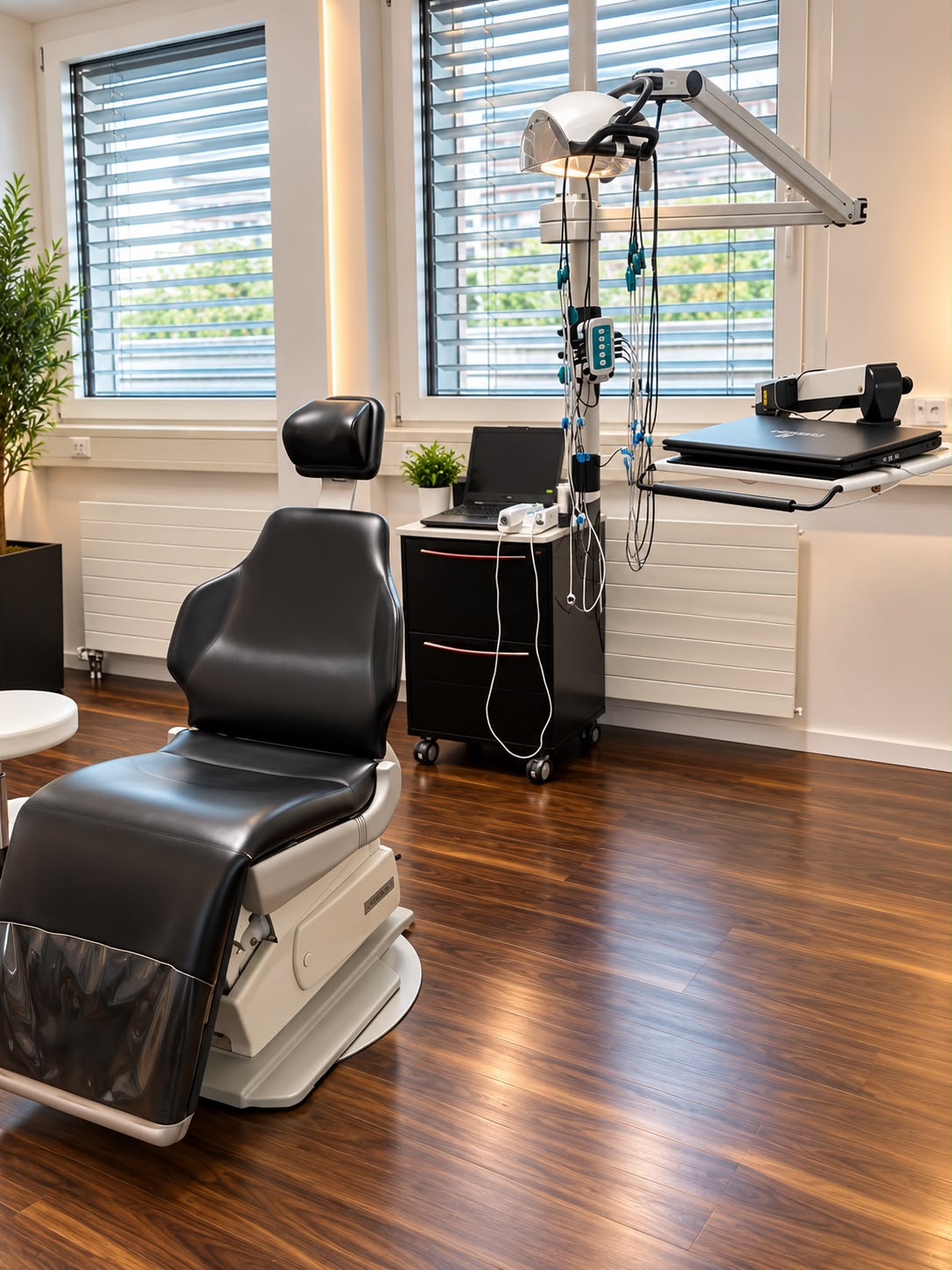
- 01
Detailed medical history
We take time for your whole story, including what nobody wanted to hear so far.
- 02
Digital 3D scan
A high-resolution intraoral scan creates a digital model of your jaws: fast, precise and without unpleasant impressions.
- 03
EMG muscle measurement: the “ECG of the jaw”
Electromyography records the electrical activity of the masticatory and head muscles and makes it visible as a curve, like an ECG of the jaw. So you can see in black and white which muscle is constantly working when it should be resting.
- 04
Electronic bite registration
A digital picture of the chewing forces: tooth by tooth it becomes measurable where too much or too little pressure arrives, and where your lower jaw actually shifts when you bite.
- 05
Balance measurement: from the foot to the jaw
With spine and foot pressure measurement we record balance and posture along the entire chain, in this order: Foot → pelvis → spine → shoulder → neck → head muscles → jaw system, without X-rays. Important to understand: we treat neither the spine nor the feet. We look from there at the jaw system. It is our starting point, and the measurement shows us what arrives there.
- 06
Functional measurements & movement analysis
Movement paths of the lower jaw and further functional measurements make the misregulation objectively visible, without X-rays.
- 07
System analysis: craniomandibular & cervical
System analysis of the craniomandibular system (jaw) and the cervical system (cervical spine), including a manual structural analysis that examines the jaw joint, muscles and ligaments by hand.
- 08
CMD treatment planning
We show you your data visually and explain clearly what they mean, until everything is clear.
- 09
Description of services
Your individual treatment plan is based on the diagnosis. Before every step you receive a description of services: what we do and why it makes sense.
How certain is this? There is a good scientific basis for the connection between the jaw system and the head, face and neck. For the connection further down (spine, pelvis, feet) and for the link with ear complaints, however, the evidence is inconsistent. What we say about it is based on many years of clinical experience, not on established proof. We prefer to tell you this openly rather than pretend a certainty that does not exist.
Step 2: Regulation
How CMD System Therapy works
We don’t force anything into shape. We regulate : we guide a system that has fallen out of balance back in small, controlled steps.
Behind this is a particular view of the body: systems medicine. It sees the body not as a kit of individual parts but as a system that constantly readjusts itself: posture, tension, balance. As long as this readjustment succeeds, you notice nothing. If it has to work against resistance for years, it becomes costly for the body, and the bill often arrives in a completely different place from where the resistance is.
CMD Systems Medicine takes exactly this view and makes the jaw system its focus. This is not a claim that everything comes from there, but the observation that it is one of the few places where the control can be influenced specifically and from outside . That is exactly what CMD System Therapy.
- 1
Pre-treatment & relief
Releasing acute muscle tension so that you feel relief quickly.
- 2
Your individual “glasses for your bite”
Poor eyesight is not corrected with an operation, but first with glasses. We follow the same principle with the jaw system: a removable positioning splint , made to the millimetre, guides the lower jaw into a relieving position without changing healthy tooth structure. If it doesn’t fit, you take it out. That is exactly what makes it a safe first step.
- 3
Regulation appointments
In regular regulation appointments we carefully readjust your splint and accompany the regulation process over time.
- 4
Psychological support
Long periods of distress leave their mark. We also provide psychological support along the way, so that body and mind can settle together.
- 5
Accompanying therapies & optional permanent restoration
Interdisciplinary if needed (physiotherapy, osteopathy). Permanent solutions only if the regulation has a lasting effect and they are really necessary.
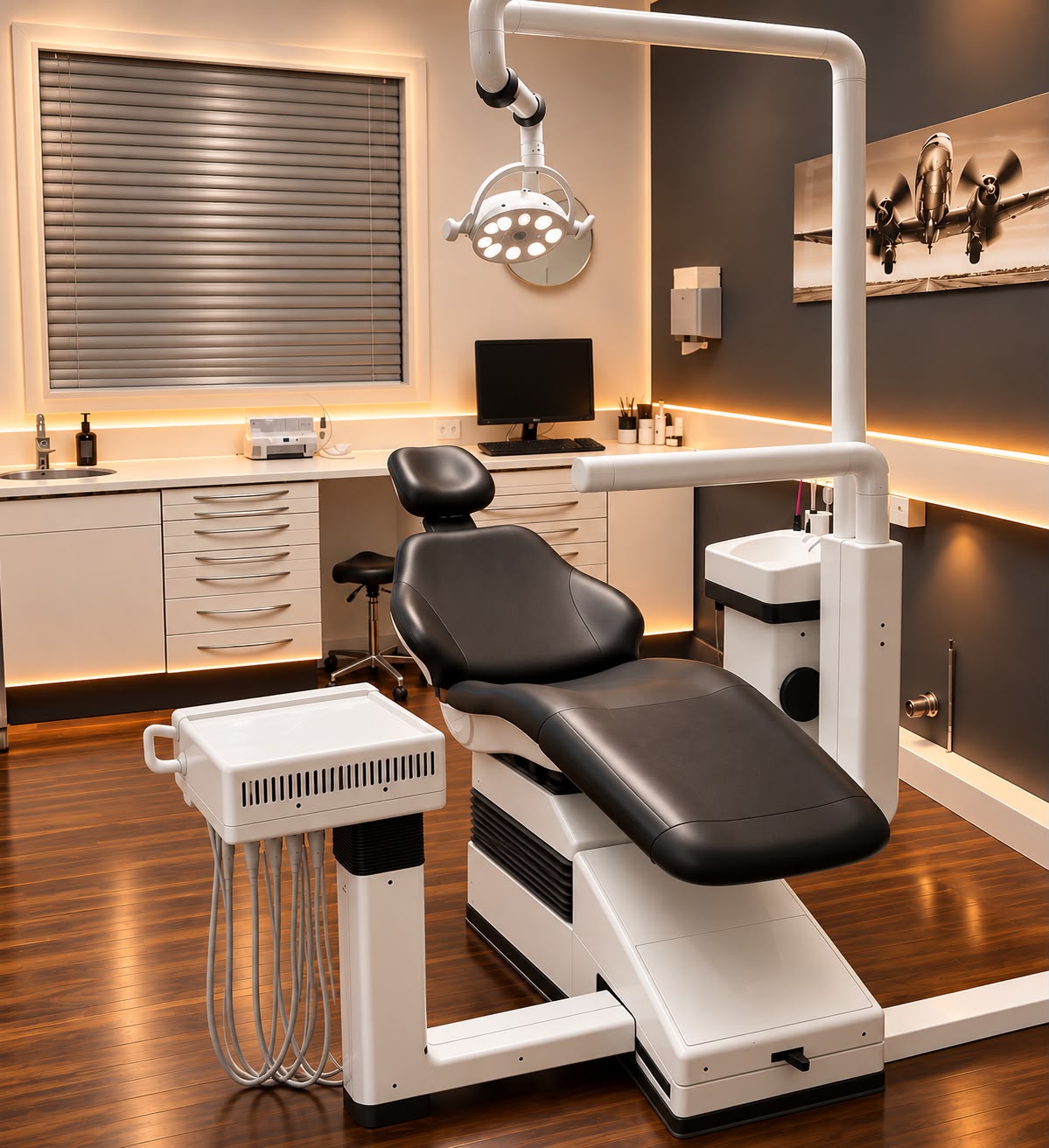
The core
Neuromuscular repositioning
The core of the treatment is the repositioning of the lower jaw , not forced mechanically but neuromuscularly and by reflex. The “glasses for your bite” guide the jaw system into the position that muscles and nerves “recognise” as relaxed. This breaks the vicious circle of misregulation, overload and pain, at the cause rather than the symptom.
- Removable: nothing is changed on healthy tooth structure
- Matched to your bite to the millimetre
- With psychological support, because high distress needs to be treated too
Bite in the mouth = bite in life
When the jaw system is back in balance, often more than freedom from pain returns: sleep, energy, confidence.
A bite for life.
Often confused
Not all splints are the same
Many people come to us with a splint and don’t know which one they are wearing. That is no coincidence: three very different appliances share the same everyday name. They have different aims, and none replaces another.
- Core of system therapy
positioning splint
Guides the lower jaw into a relieving position and carries the step-by-step adjustment. It is the core of our CMD System Therapy and requires functional diagnostics, because otherwise nobody knows where it should lead.
- First relief
Bite or relaxation splint
Relaxes the jaw muscles and provides first pain relief. A sensible step when things are acute, and with us often the start before any adjustment.
- Protecting the teeth
Night guard
Protects the teeth from wear caused by grinding at night. If you grind but have no other complaints, this is exactly the right and much less expensive solution. Then you don’t need system therapy, and we will tell you so.
I have a splint from the chemist or the internet. Is that enough?
It can do its job in protecting the teeth. What it cannot do is guide the lower jaw specifically. For that it would have to be matched to your measurements, and that requires the measurement. Feel free to bring your splint to the appointment and we will take a look.
And Botox? You hear a lot about it.
Botulinum toxin temporarily relaxes the masticatory muscles, and in individual cases of otherwise treatment-resistant muscle pain it may be worth considering. We do not use it. Systematic reviews show no consistent advantage over sham treatment, and with repeated use a loss of bone in the lower jaw has been described. And there is our own reason: we don’t want to paralyse an overloaded muscle, but to understand what it is working against.
Will something have to be ground down in the end after all?
Not as a first step and not without asking. We deliberately start with what can be undone. If the bite is already too low, grinding down would even be the wrong way; then it is about building up, not taking away. We only talk about permanent steps once the regulation holds and you want it.
The next step is simple
In the initial phone consultation we clarify whether this treatment is the right path for you. No obligation.